
Running a Sex Offender Check in Brooks County
The Texas Public Sex Offender Registry is the main official channel for Brooks County. Texas DPS maintains the statewide database, so a Brooks County search is not limited to a city list or a sheriff webpage. Choose Brooks in the county field when the goal is to see countywide results. Use the Falfurrias field only when the city boundary truly matches the question. Rural homes, ranch roads, and addresses beyond city limits can otherwise fall outside an overly narrow city search.
Start with the least ambiguous fact available. A full name is useful, but a location search can reveal nearby reported addresses when the name is unknown. Open a result only after comparing the displayed identifiers. A common name, an alias, or an old address can point to the wrong profile. For a local registration-office question, call the Brooks County Sheriff at 361-325-3696. The research found no county registry app, email-alert app, fixed registration hours, or published registration fee.
Brooks County Registry Search Modes
The registry interface offers different routes for different facts. The official Texas DPS search screen shows why county and address controls matter in a place where the incorporated city does not cover every home.
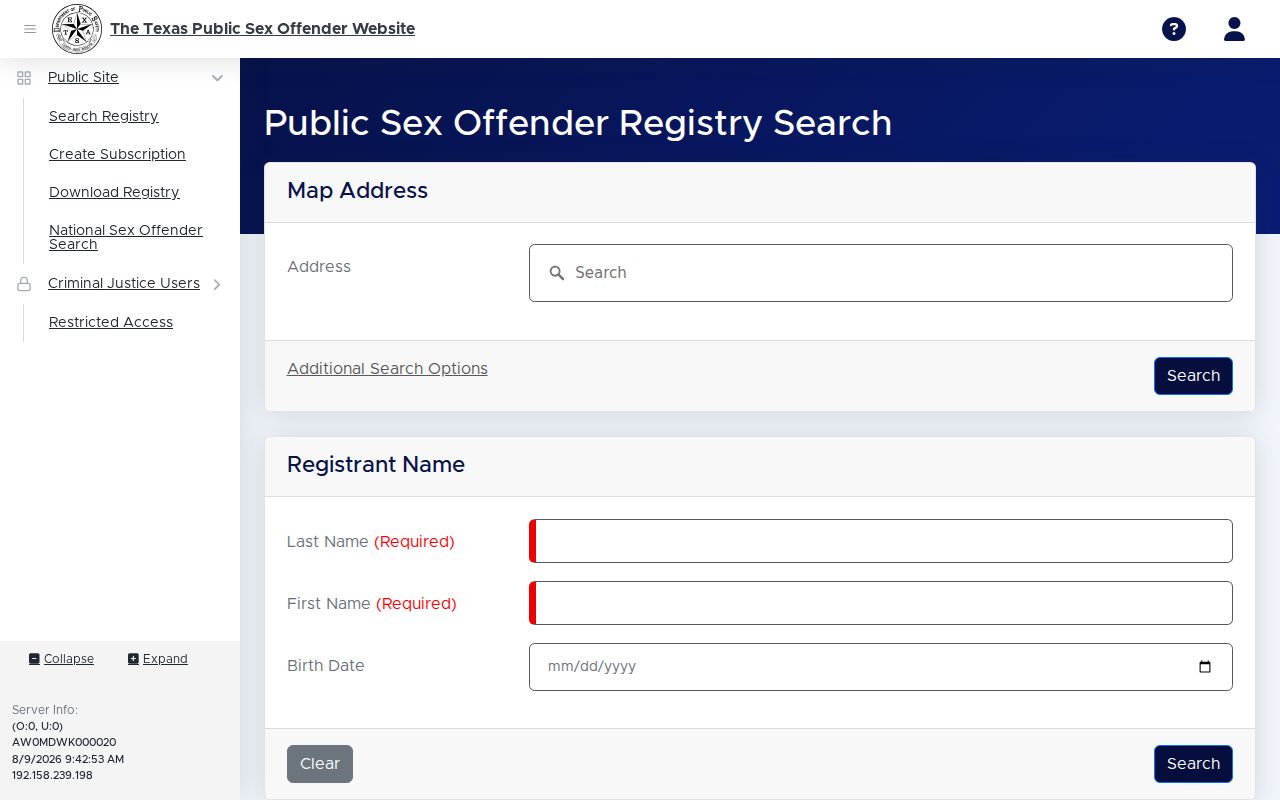
Name mode works best when spelling and identity are known. Location mode is better for an address-based safety check, while the institution mode covers higher-education links. A county filter can catch reported Brooks County addresses beyond Falfurrias. Map and list views are ways to display reports, not proof that every point is current to the minute. Open each profile and read its verification data.
Searching the Texas Public Sex Offender Registry
Use the official DPS page and its conditions of use. Keep the search broad at first, then narrow it with facts that can be checked. Exact labels and radius options may change as DPS updates the live interface.
- Open the registry and review the conditions governing public information.
- Choose name, address or location, or institution search mode.
- Select Brooks County, or enter Falfurrias, a ZIP code, an address, and a radius when those facts fit.
- Compare results, open the full profile, and verify status, agency, address, offense, and dates before drawing a conclusion.
| Field or control | Type | Required | Use |
|---|---|---|---|
| Search type | Tabs | Yes | Name, Address/Location, or Institute of Higher Education |
| Last name | Text | Name mode | Enter surname |
| First and middle name | Text | No | Narrow a name match |
| County | Dropdown | No | Select Brooks for countywide results |
| City and ZIP | Text or dropdown | No | Use Falfurrias or the relevant ZIP |
| Address and radius | Location controls | Location mode | Search near an origin; verify live radius choices |
| Map or list | View control | No | Changes how results appear |
Note: A blank or narrow result may reflect search inputs, address reporting, or jurisdiction boundaries rather than a final safety conclusion.
Brooks County Rural Address Results
Brooks County is large and sparsely populated, and Falfurrias is its only incorporated city. An address search limited to Falfurrias can miss a reported residence on a county road or in unincorporated ranchland. Run a second query with Brooks selected as the county. If proximity matters, use the address-radius tool and compare both the map and list. Do not treat the apparent map location as a survey marker or a promise of real-time presence.
The Texas Public Information Act explains the wider public-record setting in which local agencies respond to requests.
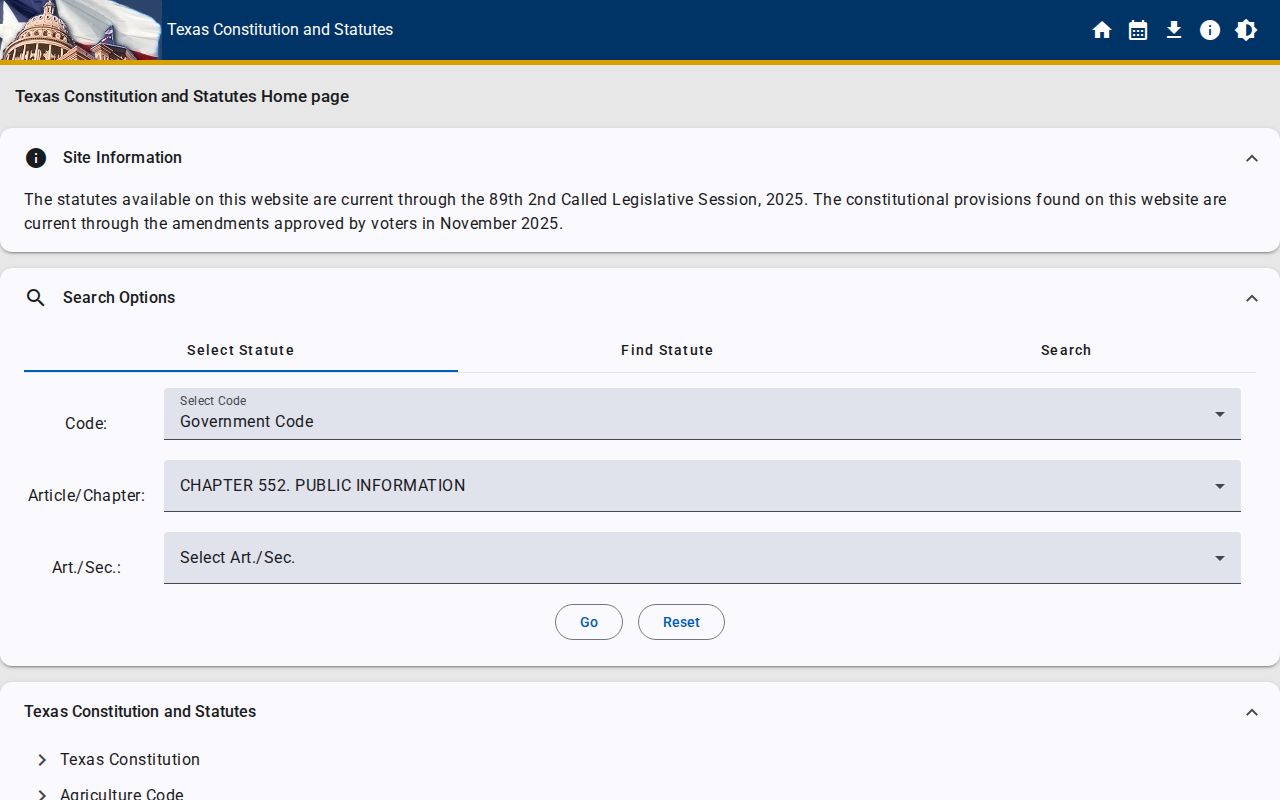
Registry publication is governed more specifically by Chapter 62, but the image reinforces an important distinction: public access has legal bounds. When a point appears wrong, report the concern to the registering agency. Do not visit the address or confront anyone.
What a Registry Profile Shows
A public profile combines identity, reported location, registration status, and offense information. Read those fields together. A photograph helps with identity, an alias explains a name variation, and a verification date gives context for the address. None of those fields alone proves current conduct.
| Name and aliases | Registration name plus reported alternate names. |
|---|---|
| Photo and description | Current published photograph, sex, race, age or birth data, height, weight, hair, eyes, and marks where public. |
| Reported residence | Public address information and location details allowed by law. |
| Offense record | Description, statute, conviction date, jurisdiction, and permitted victim-category data. |
| Risk and status | Texas risk designation when assigned, compliance state, registering agency, and verification date. |
| Other public fields | Vehicle, employer, school, or other details when Chapter 62 makes them public. |
Texas risk words are not federal SORNA tiers. DPS may display low, moderate, or high risk when an assessment exists, while the duty length turns mainly on the reportable offense and Article 62.101.
Brooks County and NSOPW
The National Sex Offender Public Website is the official federal search layer for a question that crosses state or tribal boundaries.
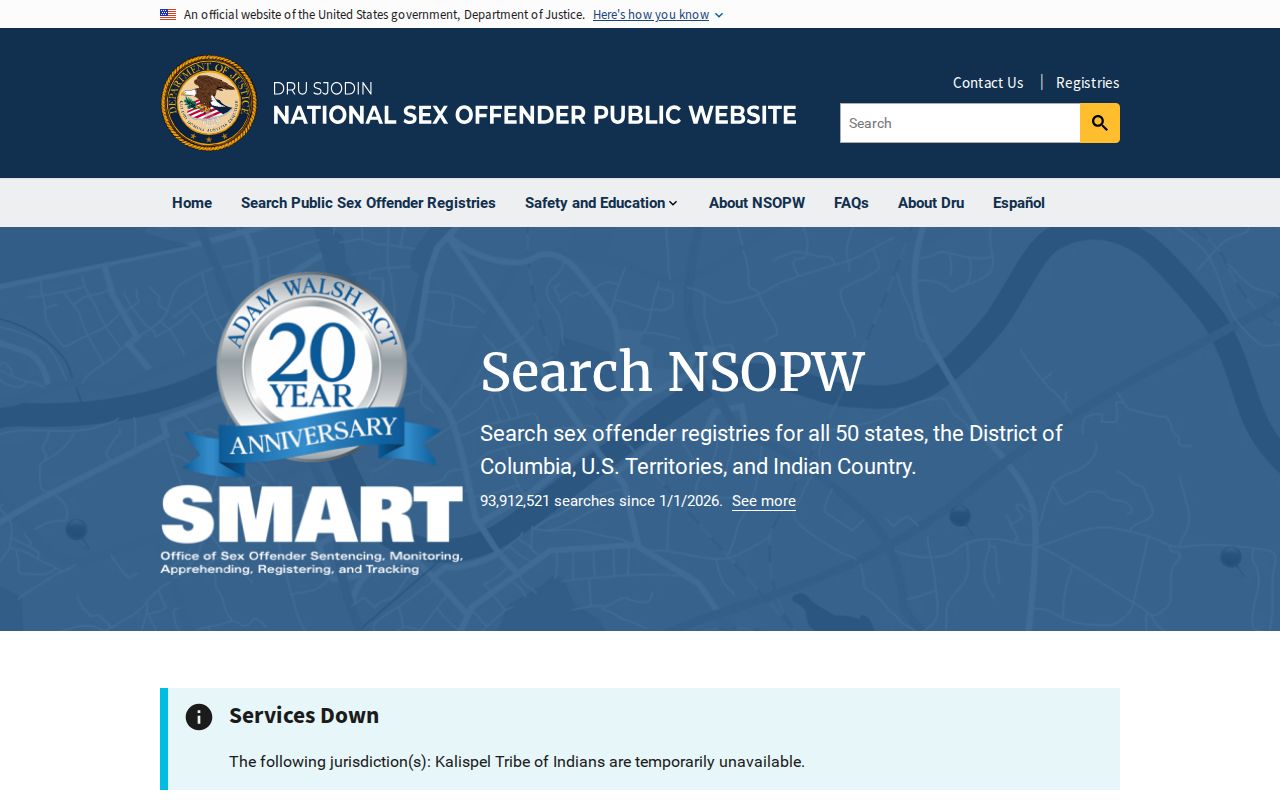
Use NSOPW when a person may have moved across a state line or when the relevant place is not confined to Brooks County. Return to Texas DPS for the detailed Texas profile and local agency information. The systems complement each other. Neither should be replaced with a commercial people-search page, and neither should be read as a guarantee that no unlisted risk exists.
Registration Requirements and Levels in Texas
Texas Code of Criminal Procedure Chapter 62 controls registration, verification, risk assessment, public notice, and expiration. Texas does not simply assign the federal Tier I, II, and III labels to every person. Risk assessment and registration duration are related but distinct concepts.
| Texas category | General duration | Verification and visibility |
|---|---|---|
| Lifetime-reportable offenses | Lifetime, subject to the statute | Often annual verification; some categories verify more often |
| Other reportable convictions or adjudications | Generally ten years after release, discharge, or supervision ends | Exact start and end depend on Article 62.101 |
| Repeat combinations or sexually violent offenses | Often lifetime | Confirm the exact offense and judgment |
| Juvenile or court-modified duty | Court and statute specific | Exemption or modification may apply; do not infer from adult rules |
Articles 62.051 through 62.058 address core reporting and change duties. Articles 62.201 through 62.207 cover risk assessment. A profile should be read against the actual judgment and the current statute, especially when a reader is trying to understand why two records have different duty periods.
Brooks County Registration Office Fallback
Texas DPS publishes the statewide file, but the Brooks County Sheriff is the local law-enforcement contact for registration in unincorporated Brooks County. Call 361-325-3696 to confirm where and when to report, or to pass along a good-faith concern about possible noncompliance. A person living within Falfurrias may route through the municipal or other local authority under Chapter 62, so confirm the responsible agency before appearing.
The official Texas criminal-history dissemination law illustrates why registry information and general criminal history should not be treated as one product.
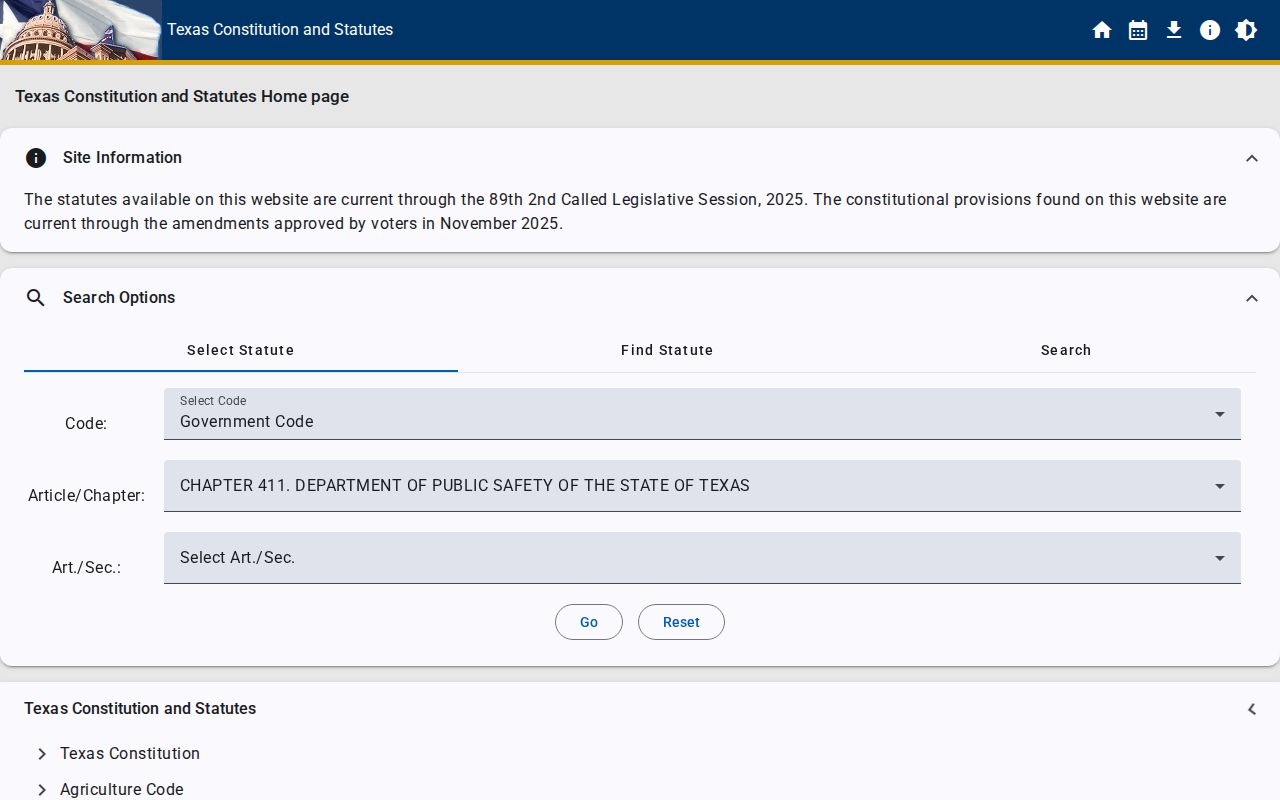
The sheriff page does not publish a special registration-unit name, fixed appointment schedule, alert signup, or registration fee. Call first. For suspected noncompliance, provide facts and let law enforcement assess them. Personal contact, surveillance, or online accusation can create danger and may break the law.
Brooks County Ten-Year or Lifetime Duties
The short answer is that Texas duration depends on the reportable offense and statutory route, not merely the public risk word. Article 62.101 generally sets lifetime registration for listed categories and a ten-year period for other qualifying convictions or adjudications after release, discharge, or the end of supervision. Repeat offenses and sexually violent categories can change that result. Juvenile and court-modified duties follow their own rules.
The official Chapter 62 text is the source for the registration program and its duration rules.
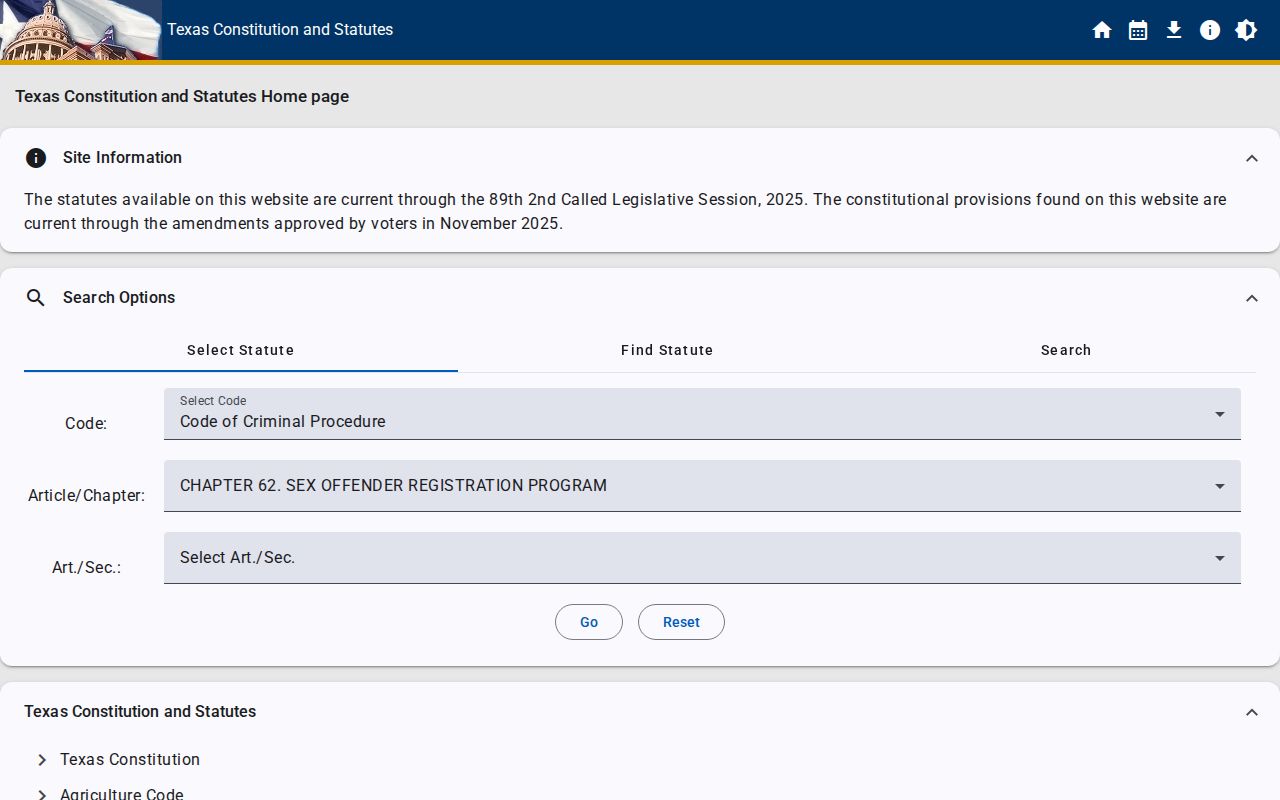
A registry profile is a starting point for understanding duty, not a legal opinion about its end date. When status or duration appears inconsistent, record the profile details and contact the registering agency or qualified counsel.
Lawful Use and Community Notification
Registry information supports personal safety, family planning, and community awareness. It is not permission to threaten, injure, shame, or harass a listed person or anyone in that household. Address results may lag a reported change, and the absence of a result does not certify that a place or person is safe. Use ordinary safety practices and report a specific concern through law enforcement.
Use registry data lawfully: Texas DPS and NSOPW warn against using registry information to injure, harass, or commit a crime. Chapter 62 information must never become a tool for threats, intimidation, or vigilantism.
For a Brooks County report, preserve the public profile URL, note the displayed agency and verification date, and call the agency shown. If the issue concerns unincorporated Brooks County, the sheriff is the practical local start. For cross-state information, use NSOPW and the registry of the state that supplied the profile.
Keep the search record focused on public facts. Note which mode was used, the spelling entered, the county or radius selected, and the date of the check. If a later Brooks County search differs, compare the verification date and registering agency before assuming that either result is false. DPS receives updates from local authorities, so the agency named on the profile is the best place to ask about a possible error. Public registry access is meant to support calm, informed choices. It is not a substitute for police help during an urgent threat, nor does it authorize a private inquiry into a listed household.